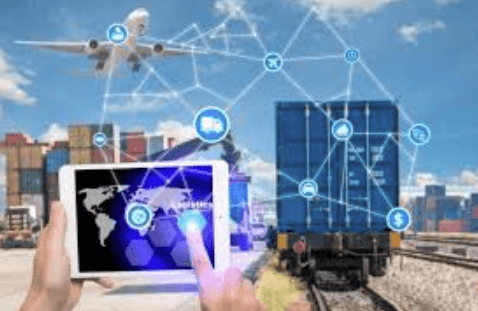
The future of connected transportation sits at the intersection of AI, sensors, and urban design. Real-time data streams from vehicles, streets, and users could orchestrate safer, more efficient flows and adaptive safety margins. Privacy, equity, and resilience shape governance as digital twins and cloud orchestration scale, while edge computing enables rapid decisions. Investments sharpen user-centered apps and security. The question remains: how will these systems harmonize with streets and lives, and what new frictions will arise as the network grows?
How Connected Tech Transforms Urban Mobility
Connected technologies are reshaping urban mobility by weaving data streams from vehicles, infrastructure, and users into an integrated network that optimizes routes, reduces congestion, and enhances safety.
In this vision, urban networks emerge through probabilistic, interdisciplinary planning; data governance structures enable trust and privacy; autonomous lanes test frontier efficiency; micro mobility integration expands accessibility while preserving freedom for diverse city journeys.
Real-Time AI for Safer, Smarter Streets
Real time AI orchestrates adaptive safety margins, predictive flows, and resilient rerouting.
Safer streets emerge from probabilistic insights, interdisciplinary collaboration, and connected tech integration, redefining urban mobility as proactive, humane, and freely navigable within a dynamic, data-informed ecosystem.
Privacy, Equity, and Resilience in Intelligent Transport
The evolving landscape of intelligent transport foregrounds privacy, equity, and resilience as foundational pillars guiding design, deployment, and governance.
Visionaries anticipate interconnected systems accounting for privacy gaps and equitable access while tracing resilience metrics across networks, stakeholders, and environments.
Probabilistic forecasting suggests governance adapts to emergent risks, enabling inclusive experimentation.
Interdisciplinary collaboration envisions freedom through transparent data stewardship and resilient, trustworthy mobility ecosystems.
The Roadmap: From Infrastructure to Everyday Apps
What lies ahead is a measured ascent from backbone networks to everyday apps, a trajectory that translates infrastructure investments into usable, user-centered experiences across daily travel, freight, and public spaces.
The roadmap emphasizes infrastructure planning, app ecosystem, urban data governance, rider experience, privacy safeguards, equitable access, resilience engineering, predictive maintenance, network latency, edge computing, autonomous fleets, multimodal integration, sensor fusion, digital twins, cloud orchestration, open standards, smart contracts, OTA updates, cybersecurity resilience, incident response.
Frequently Asked Questions
How Will Job Displacement Be Managed With Autonomous Transport?
Job displacement from autonomous transport is managed through proactive policy, adaptive programs, and stakeholder collaboration; job retraining and wage disruption mitigation are central, with probabilistic forecasting guiding investments, interdisciplinary learning, and freedom-oriented pathways for workers to transition confidently into new roles.
What Standards Ensure Interoperability Across Vendors and Cities?
Standards governance ensures vendor interoperability across cities, creating a shared horizon where diverse systems converge. The vision depicts probabilistic collaboration, interdisciplinary stewardship, and adaptable frameworks that empower freedom-seeking audiences to navigate interoperable, resilient transportation ecosystems.
Who Funds Universal Broadband Access for Connected Vehicles?
Funding models and public private partnerships drive universal broadband access for connected vehicles, enabling scalable, cross‑jurisdictional networks. The vision emphasizes interdisciplinary collaboration, probabilistic planning, and freedom‑driven innovation to sustain inclusive, resilient mobility futures across diverse urban and rural landscapes.
How Will Liability Be Determined in Mixed-Traffic AI Incidents?
A 78% rise in autonomous-vehicle incidents prompts nuanced liability allocation debates; incident causation hinges on multimodal data fusion. The analysis envisions adaptive frameworks, where probabilistic assessments guide liability allocation across stakeholders, fostering interdisciplinary, freedom-seeking governance and transparent accountability.
See also: The Future of Technology in Connected Living
What Environmental Trade-Offs Come With Advanced Vehicle-To-Grid Tech?
Advanced vehicle-to-grid tech imposes environmental costs through production and energy sourcing, while promising grid flexibility; visionaries recognize probabilistic outcomes, interdisciplinary insights, and freedom to navigate balancing environmental costs and grid integration challenges for resilient systems.
Conclusion
The trajectory of connected transportation sketches a future where streets are intelligent, anticipatory, and inclusive. Real-time AI threads together vehicles, pedestrians, and infrastructure into a resilient tapestry, continually reconfiguring safety margins and flows. Privacy and equity are not afterthoughts but design constraints guiding innovation. Like a living digital twin of the city, the system evolves through open standards and edge-cloud harmonies, turning data into humane mobility. The road ahead is probabilistic, collaborative, and transformative.