Dining tables are often chosen according to appearance: a generous farmhouse rectangle, perhaps, or a compact circle with a sculptural base. Yet shape makes a noticeable difference to the way people move, sit and talk in the room. A table that looks modest in a showroom may be difficult to walk around at home once chairs are pulled out. Conversely, a smaller table can feel surprisingly sociable if its shape suits the room. Before deciding which style you prefer, measure the available floor and think about everyday meals, homework, visitors and the route to the kitchen. The best shape is the one that supports those routines without turning the dining area into an obstacle course.
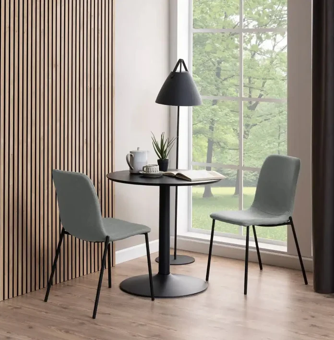
PRODUCT IMAGE | A compact round table with chairs arranged on either side.
Measure the Space With Chairs in Position
Start with the room’s usable dimensions, not just its wall-to-wall measurements. Account for sideboards, radiators, door swings, kitchen units and any route people regularly walk through. Mark the intended tabletop on the floor with tape or newspaper, then imagine the chairs occupied and drawn away from the table. As a planning guide, around 75–90 centimetres beyond the table edge can allow space to pull out a chair, while busy circulation routes may need more. These are starting estimates, not fixed rules for every home or chair design.
The type of chair changes the requirement. A bench can slide closer to a wall, whereas a broad upholstered armchair needs more room. Measure the actual chairs, including any arms, and check their ability to tuck beneath the table. In an open-plan kitchen, pay particular attention to the route between cooking appliances, the sink and the dining area. A table that interrupts that route can be frustrating every day, however attractive it looks.
See also: Vancouver’s Hidden Gems
Where a Circular Shape Earns Its Place
A round dining table can be especially appealing in a square dining nook or a room where people approach the table from several directions. Without corners, it creates a softer outline and can make conversations feel more inclusive because diners are angled towards one another. A pedestal base may also free up leg space compared with four corner legs, although the actual base dimensions still need checking.
Round tables are not automatically space-saving. Their diameter includes unused central space that may be harder to reach on larger models, and a large circle can occupy more of a narrow room than expected. In a small household, a compact diameter may work beautifully for breakfast and casual meals. If you frequently seat six or more people, compare the diameter and chair spacing carefully; a larger round top can become less convenient for serving dishes across the middle.
Why Rectangles Often Win in Long Rooms
Rectangular tables tend to use the proportions of narrow dining rooms efficiently. Their long sides can run parallel to a wall or kitchen island, leaving a more predictable walking corridor. They also make it straightforward to place people along two sides, with occasional seating at the ends. For households that combine dining with craft projects or paperwork, the long work surface can be useful for spreading things out without blocking every place setting.
PRODUCT IMAGE | A rectangular dining table can follow the proportions of a longer room.
The drawback is that corners and table legs can restrict movement, particularly when the table sits close to a doorway. A very long table may also make conversation across the group feel less immediate. Look closely at the apron and leg positions; a six-seat table on paper might not comfortably accommodate three broad chairs on each side. If you are considering a bench, check whether it can move under the table and whether everyone can leave the seat without asking another diner to stand.
Think About Guests, Extensions and Flexibility
Most households do not entertain the same number of people every evening. An extending rectangular design can offer a useful compromise between daily meals and larger gatherings, while some circular tables extend into an oval. Ask where the extension leaves will be stored, whether one person can operate the mechanism and how the table’s clearance changes when fully open. The expanded footprint should be tested against doors and circulation routes, not simply assumed to fit because the closed version does.
PRODUCT IMAGE | An extending table detail illustrates an option for occasional extra seating.
For entertaining, allow enough tabletop width for plates, serving dishes and drinks, but avoid choosing an oversize design for rare occasions at the expense of ordinary comfort. Occasional folding chairs or a nearby serving surface may be more practical than a permanently enormous table. Families with young children may prefer rounded corners and easy-clean finishes, while people who host long dinners might prioritise chair comfort and elbow room.
Match Materials to How You Use the Table
Wood, glass, stone-effect finishes and laminate surfaces bring different visual and maintenance qualities. Timber can feel warm and versatile, but finishes vary in their tolerance of moisture and heat. Follow the manufacturer’s care instructions and use mats or coasters where recommended. Glass can look visually light, yet shows fingerprints readily and requires suitable cleaning. Heavier stone or composite tops need careful consideration of handling, support and floor protection.
Also study the base. A central pedestal can allow flexible chair positions, but broad feet may meet diners’ shoes. Four legs feel familiar yet sometimes limit end seating. A table’s construction and support are more important than assuming one particular shape or material will always be sturdier. Choose a surface and structure that suit frequent use, not only a special occasion.
Make Shape Follow the Room
Round tables encourage a different rhythm from rectangular ones, but neither is universally better. The deciding factors are room proportions, chair dimensions, circulation and the number of people you seat regularly. Mark out both options, test them with chairs and give everyday movement as much consideration as appearance. The table should make meals easier to share, not harder to reach.