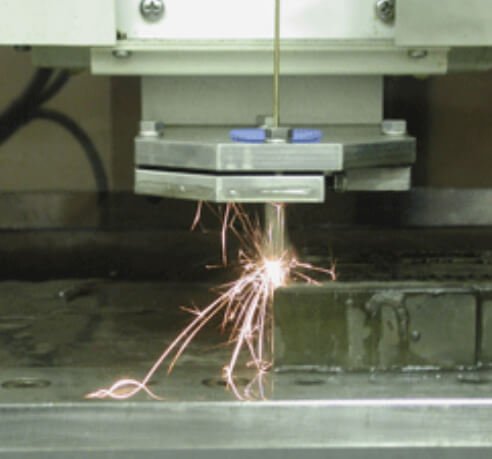
Small holes are essential in many industrial components, including dies, moulds, tooling, precision assemblies, and specialised manufacturing equipment. Producing these holes can be challenging when the material is hard, the required diameter is extremely small, or the component has a complex shape. Conventional drilling methods may not always provide the required access or performance, which is why manufacturers sometimes evaluate electrical discharge machining.
Small-hole EDM is a specialised process that can help produce holes in suitable electrically conductive materials. Selecting the right approach requires an understanding of material properties, hole dimensions, accuracy requirements, and the intended application.
Why Small-Hole Drilling Requires Careful Planning
Small-hole machining leaves little room for error. Tool deflection, breakage, heat, chip evacuation, and alignment can all affect the finished result. These challenges become more significant when working with hard materials or when a hole must be produced at a precise angle or depth.
Before choosing a process, manufacturers should establish the required hole diameter, depth, position, tolerance, and surface condition. The component’s function also matters. A hole used for fluid flow may have different acceptance criteria from one used for a precision assembly or specialised tooling application.
Clearly defined specifications make it easier to compare available technologies and inspect the finished work.
Understanding Electrical Discharge Machining
Electrical discharge machining removes conductive material through controlled electrical discharges between an electrode and the workpiece. The process does not rely on a conventional cutting edge in the same way as mechanical drilling.
For small-hole applications, a suitable electrode and machine configuration can create openings in materials that may be difficult to machine using conventional tools. However, the achievable result depends on the equipment, electrode dimensions, workpiece material, flushing conditions, and operating parameters.
EDM is not suitable for every substrate. Electrical conductivity and the machine’s supported operating range must be confirmed before work begins.
Manufacturers researching specialised equipment can review the Clyertek portable EDM drilling machine as a reference when comparing solutions for selected small-hole machining tasks.
Potential Applications of Small-Hole EDM
Tooling and mould maintenance
Toolrooms often work with dies, moulds, and specialised tooling made from hard conductive materials. When a small hole must be created in a suitable component, EDM may offer an alternative to conventional drilling.
The specific application should be assessed carefully, especially when the part has tight tolerances or a surface that must remain undamaged. Trial work and dimensional inspection help determine whether the process meets the engineering requirements.
Industrial components
Some manufactured components require small openings for functional or assembly purposes. EDM may be considered when the material or hole geometry makes conventional machining difficult.
Before processing, determine whether the hole needs a particular diameter, straightness, depth, or finish. These characteristics should be verified using appropriate inspection equipment.
Repair and maintenance work
Maintenance teams may need to modify or repair existing components rather than manufacture replacements. Portable equipment can be useful in certain situations where moving the workpiece is inconvenient, provided the machine is suitable for the task and can be installed safely.
The condition of the component should be inspected before machining. Existing cracks, distortion, or material damage may affect whether repair is practical.
Factors to Consider When Selecting Equipment
Equipment should be selected according to the actual production requirement rather than a single headline specification.
Important factors include the supported material types, hole diameter range, maximum depth, positioning accuracy, electrode compatibility, workpiece dimensions, and available flushing arrangements. The machine’s power requirements, setup process, consumables, and maintenance needs should also be reviewed.
Portability may improve flexibility, but it does not guarantee that every job can be performed in place. A secure working arrangement, stable positioning, and suitable access remain essential.
Ask the supplier to demonstrate the process using representative materials and hole dimensions. A sample test can reveal practical limitations that are not obvious from a product description.
Quality Control for Small Holes
Inspection should be planned before production begins. Depending on the application, verification may include measuring diameter and depth, checking hole position, examining the surface, and confirming that the opening meets the component drawing.
Maintain records of approved settings, electrode selection, inspection results, and any changes made during setup. This helps identify sources of variation and supports repeatable results.
Where the component has critical functional requirements, use the inspection method specified by the relevant engineering or quality procedure. Visual inspection alone may not establish dimensional accuracy.
Safety and Maintenance Considerations
EDM equipment should be installed and operated according to the manufacturer’s instructions. The relevant hazards depend on the machine design, electrical arrangement, workpiece, dielectric or flushing system, and working environment.
Operators need training in setup, workpiece securing, machine controls, routine inspection, and emergency procedures. Electrical connections and other equipment components should be maintained according to the approved schedule.
Before starting work, verify that the component is secure and the machine is configured for the intended application. Do not bypass protective systems or improvise with unapproved accessories.
Frequently Asked Questions
1. Can EDM drill small holes in hard metals?
It may be suitable for small-hole machining in compatible conductive materials, including certain hard metals. Actual capability depends on the machine, electrode, material, and required hole dimensions.
2. Is portable equipment suitable for every component?
No. Component size, access, stability, and the machine’s operating limits determine whether portable equipment is appropriate. Some jobs require a dedicated workshop setup.
3. How can manufacturers verify small-hole quality?
Use suitable dimensional inspection methods to check the required diameter, depth, position, and other specified characteristics. Establish acceptance criteria before machining begins.
Conclusion
Small-hole machining demands careful control of dimensions, material compatibility, and workpiece positioning. EDM can provide a useful alternative for selected conductive materials and challenging applications, but its suitability should be confirmed through testing and inspection. By defining requirements in advance, choosing compatible equipment, and following documented operating procedures, manufacturers can make better decisions about precision hole production and maintenance.